Papa Murphy’s and Pinkberry Combine Pizza and Frozen Yogurt in Three New Franchise Deals
US pizza chain Papa Murphy’s has signed three franchise agreements to launch co-branded locations with premium frozen yogurt brand Pinkberry. The planned developments span Oregon, New Mexico and Utah, combining take-and-bake pizza and frozen desserts under one roof. The strategy aims to create additional revenue opportunities for franchisees through shared premises, cross-trained employees and complementary customer occasions.

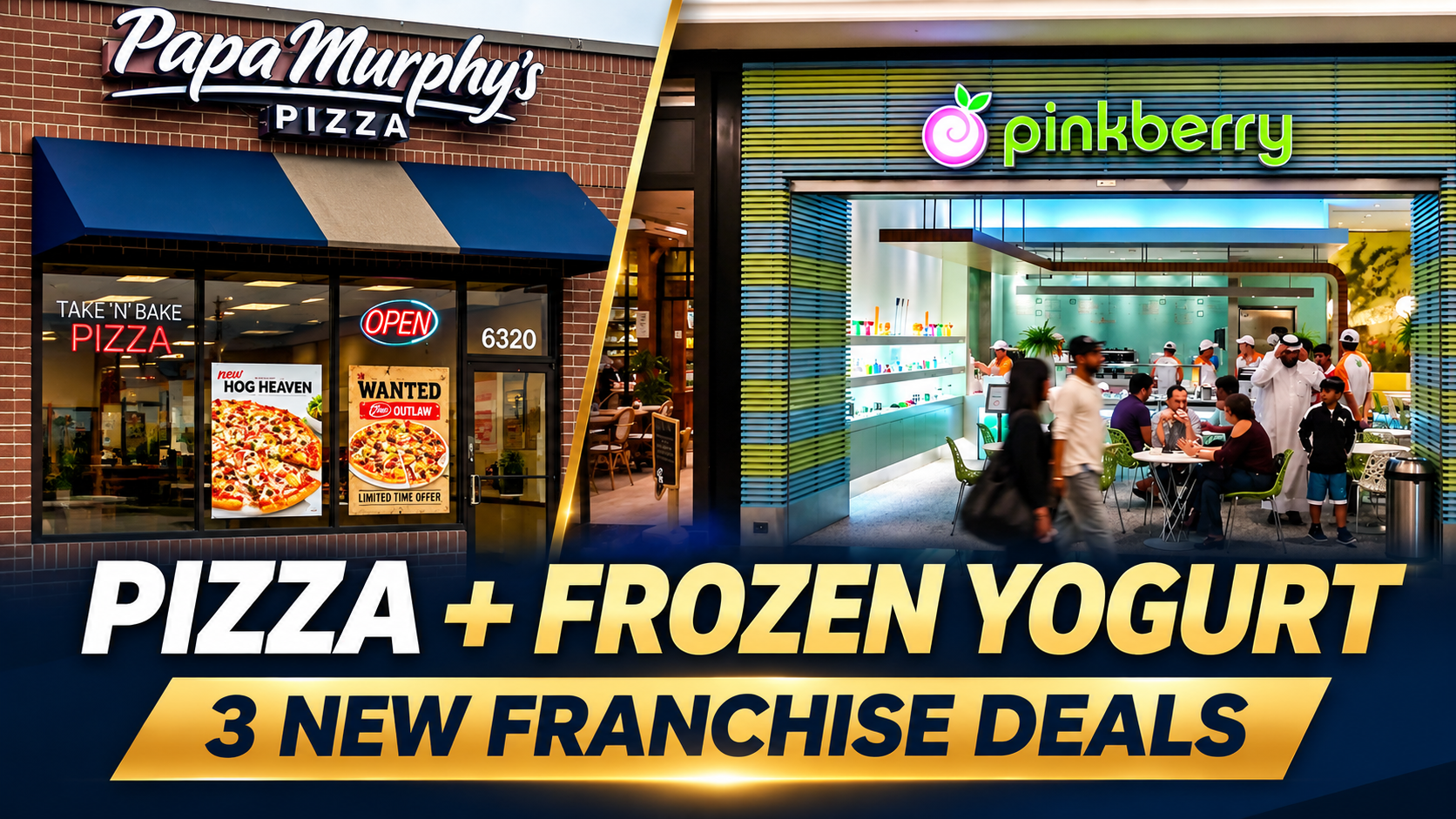
Papa Murphy’s is expanding its franchise development strategy by bringing its take-and-bake pizza concept together with Pinkberry’s premium frozen yogurt offering. The two brands are set to share space in three new co-branded franchise developments across the United States, creating a combined food and dessert destination for customers.
Announced on 7 October 2026, the agreements cover locations in Sunriver, Oregon; Santa Fe, New Mexico; and West Haven, Utah. The initiative brings two brands under the same ownership together in a model designed to make more effective use of real estate, staffing and day-to-day operations.
Both Papa Murphy’s and Pinkberry are part of MTY Food Group, the Montreal-based restaurant operator whose portfolio includes multiple food-service concepts. By pairing complementary offerings, the group is exploring how its existing brands can work together to create additional growth opportunities for franchise operators.
The development is noteworthy because it focuses not simply on opening more outlets, but on how two concepts can potentially generate business from the same location.
Three Franchise Agreements, Three Expansion Strategies
The agreements demonstrate different ways franchisees can adopt a co-branded business model, from launching a new location to adding a second concept to an established restaurant.
| Location | Franchise operator | Development plan | Expected opening |
|---|---|---|---|
| Sunriver, Oregon | Joshua and Samantha Kimzey | New Papa Murphy’s and Pinkberry co-branded location | Early November 2026 |
| Santa Fe, New Mexico | John Perea | Add Pinkberry to an existing Papa Murphy’s restaurant | Not separately specified in the announcement |
| West Haven, Utah | Casey Kauer | New co-branded restaurant | Summer 2027 |
The three agreements represent a combination of new-site development and expansion within an existing restaurant footprint.
Sunriver, Oregon: A New Entry for the Franchisees
Joshua and Samantha Kimzey will open a co-branded location in Sunriver, Oregon. The project marks their first location in both the Papa Murphy’s and Pinkberry systems.
The planned opening in early November 2026 will provide an initial opportunity to observe how the combined concept operates in practice.
For the operators, the model brings together two food categories that can appeal to different customer preferences. Papa Murphy’s take-and-bake pizzas serve customers looking for a convenient meal to prepare at home, while Pinkberry offers a frozen dessert option.
The commercial opportunity will depend on local demand, operating costs and the ability to attract customers to both offerings.
Santa Fe, New Mexico: Adding a Second Brand to an Existing Store
In Santa Fe, franchisee John Perea plans to add Pinkberry to his existing Papa Murphy’s restaurant, which he has operated since 2010.
This approach differs from developing a new standalone location. By incorporating a second concept into an established business, the operator may be able to use existing premises and certain shared resources more efficiently.
The model also provides a way to test an additional revenue stream without necessarily establishing an entirely separate restaurant.
However, the financial benefits will depend on the available floor space, equipment requirements, incremental staffing needs and the additional sales generated by Pinkberry.
West Haven, Utah: Expanding an Existing Franchise Portfolio
Casey Kauer, who already operates five Papa Murphy’s restaurants in Utah, will develop a new co-branded location in West Haven.
The restaurant is scheduled to open in summer 2027.
Kauer’s existing multi-unit experience provides a different perspective on the strategy. Operators with established restaurant portfolios may have experience in staffing, local marketing, supplier coordination and operational management that can be relevant when adding another concept.
The planned development also illustrates how a franchisor can encourage existing franchisees to grow through a second brand rather than relying exclusively on new franchise recruitment.
Why Are Papa Murphy’s and Pinkberry Combining Their Brands?
The co-branded strategy is built around three principal business considerations.
1. Creating Additional Revenue Opportunities
Papa Murphy’s is primarily associated with take-and-bake pizza, while Pinkberry focuses on premium frozen yogurt and toppings.
Combining the two gives customers access to a meal and a dessert option at one location. It may also help operators serve different purchasing occasions throughout the day.
For example, one customer might purchase pizza for dinner, while another might visit for a frozen dessert. Whether these additional occasions translate into higher total sales will depend on the market and customer response.
2. Sharing Premises and Operational Resources
Running two concepts under one roof can potentially reduce duplicated costs compared with operating two separate businesses.
Depending on the store design and franchise requirements, operators may be able to share certain premises-related expenses, employee resources and operational processes.
The company has also highlighted cross-training as part of its approach. Employees trained to support both concepts may provide greater flexibility when managing shifts and customer demand.
Nevertheless, the two offerings still require suitable equipment, food-safety procedures, inventory management and brand-specific operating standards.
3. Balancing Different Customer Occasions and Seasonal Demand
Pizza and frozen yogurt can appeal to different occasions. A pizza purchase may be associated with family meals and evenings at home, while frozen yogurt can attract snack and dessert customers.
Demand for frozen desserts can also vary with weather and season, depending on the location.
Pairing the two businesses may therefore provide a more diversified sales mix than relying on one concept alone. It is a potential advantage, not a guarantee of stable revenue or profitability throughout the year.
What the Co-Branded Model Means for Franchise Investors
For prospective franchisees, this development highlights an alternative to the traditional single-brand restaurant model.
Rather than evaluating only how many outlets a brand plans to open, investors can examine whether a combination of concepts could make better use of a location and its operating resources.
| Business consideration | Potential advantage | What investors should examine |
|---|---|---|
| Real estate | One premises may accommodate two concepts | Total floor area, rent and renovation costs |
| Staffing | Employees may be cross-trained | Labour requirements, training and peak-hour coverage |
| Revenue mix | Two offerings may attract different customer occasions | Incremental sales and customer demand for each concept |
| Seasonality | Different demand patterns may help balance sales | Monthly revenue, weather effects and local trading patterns |
| Existing operations | A second concept may fit within an established store | Available space, equipment, operational disruption and incremental costs |
| Return on investment | Shared resources may improve financial performance | Total investment, margins, royalties, payback period and working capital |
The key question is whether the combined location can generate enough additional contribution to justify the incremental investment and operating complexity.
For an existing franchisee, adding a second concept may be attractive if the premises already have suitable capacity. For a new franchisee, the calculation is different because the full site-development and startup costs must be considered.
Data Insights: What We Know About the Expansion
The announcement provides several measurable indicators of the strategy, although it does not disclose the complete financial details needed to assess the model's profitability.
| Indicator | Reported information | Business significance |
|---|---|---|
| Franchise agreements | 3 | Establishes the initial scale of the rollout |
| US states involved | 3 | The concept is being introduced across multiple markets |
| Brand combination | Papa Murphy’s + Pinkberry | Connects pizza and frozen dessert categories |
| Development approaches | New locations and an existing-store addition | Tests more than one path to co-branding |
| First planned opening | Early November 2026 | Provides the earliest opportunity to observe execution |
| Latest planned opening | Summer 2027 | Extends the rollout into the following year |
| Investment and projected revenue | Not disclosed in the announcement | Investors cannot yet calculate returns from the announcement alone |
What the Numbers Tell Us
The three agreements represent an initial rollout rather than proof of a large-scale expansion programme.
The use of three locations across three states gives the company an opportunity to observe the concept in different operating environments. The mix of new development and an existing-store addition could also provide useful insight into which approach is more practical for different franchisees.
However, the agreement count should not be confused with three completed openings. The locations remain at different stages of development, and the planned opening dates are subject to execution.
The announcement does not provide the total investment required, expected average sales, restaurant-level margins, royalty structure or projected payback period. Those details would be necessary to determine whether the concept offers better economics than operating either brand independently.
What Franchise Brands in India Can Learn
Although the announced developments are in the United States, the strategy raises questions that are relevant to India's growing food-service and franchise sectors.
Indian operators often evaluate concepts based on rent, location potential, staffing, menu fit and the amount of capital required to establish an outlet. A co-branded format may be worth exploring when two complementary offerings can serve the same customer base without creating excessive operational complexity.
For example, a beverage concept and a dessert brand may share certain customer occasions, while two food brands might complement one another through different dayparts.
However, a model that works in one country should not be assumed to work in another. Indian operators would need to assess local consumer preferences, delivery-platform economics, menu compatibility, food-safety requirements and the impact of combining brands on the customer experience.
The essential lesson is to evaluate the economics of the combined operation rather than assuming that two brands automatically produce twice the opportunity.
What Happens Next?
The first planned Papa Murphy’s and Pinkberry co-branded location in Sunriver, Oregon, is expected to open in early November 2026. The Santa Fe development will add Pinkberry to an existing Papa Murphy’s restaurant, while the West Haven location is scheduled for summer 2027.
These developments should provide an initial view of how the concept performs in different settings.
For the company, the next important indicators will include customer adoption, operational efficiency, incremental sales, franchisee feedback and whether further co-brand agreements follow.
For franchise investors, the most useful evidence will be actual operating performance rather than expansion announcements alone.
Conclusion
Papa Murphy’s and Pinkberry are testing how two complementary restaurant concepts can work together through three new co-branded franchise agreements in the United States.
The strategy offers a practical example of franchise development beyond simply adding more standalone outlets. By combining food and dessert offerings, the brands aim to create additional revenue opportunities while making more efficient use of premises and staff.
The real test will be whether the combined locations deliver sustainable sales and attractive returns for franchisees. As the first restaurants open, their operating performance will offer more meaningful evidence of the model's potential than the agreements alone.
For franchise investors and business owners, the development is a reminder that growth is not only about the number of outlets a brand opens. It is also about how effectively each location uses its space, people and capital.
Follow Franchise Elect for franchise expansion news, business opportunities and practical insights to help you evaluate before you invest.
Sources
The Weekly Franchise Briefing
A curated roundup of the latest Indian and international franchise news, market trends, and brand announcements — straight from the Franchise News Desk.